Learn how just four days of structured expressive writing can help you process trauma, reduce anxiety, and start your journey toward emotional healing—backed by decades of psychological research.
What Is the 4-Day Healing Journal Method?
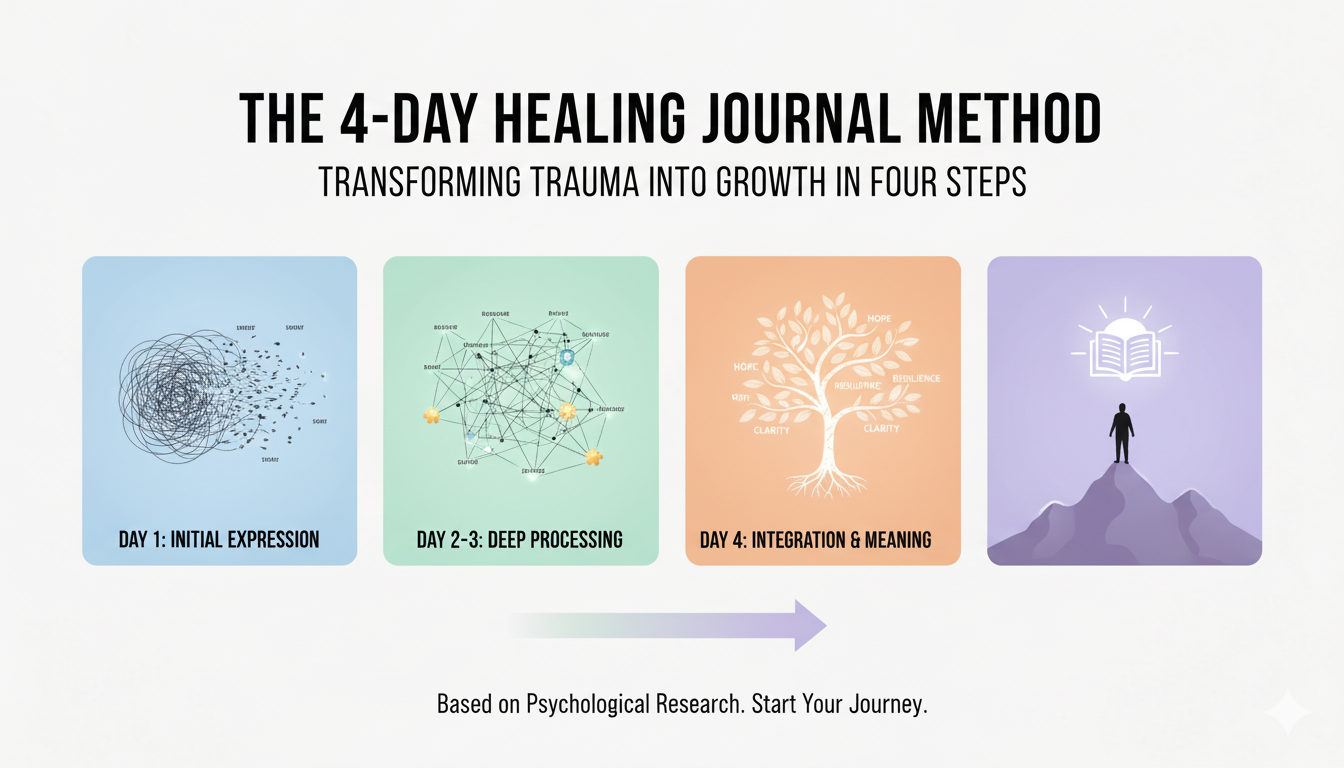
The 4-Day Healing Journal is a structured expressive writing protocol based on groundbreaking research by psychologist James W. Pennebaker. This evidence-based approach involves writing for 15-20 minutes daily over four consecutive days about emotionally significant experiences.
Unlike random journaling, this method follows a specific framework designed to help your brain process difficult emotions, create coherent narratives from traumatic experiences, and transform psychological pain into personal growth.
Why Four Days? The Science Behind the Timeline
Research by Pennebaker & Seagal (1999) revealed that forming a complete narrative requires time and repetition. Here's why the 4-day structure is optimal:
Day 1: Initial Expression
Your brain begins to organize chaotic thoughts and emotions into words. This first session often involves emotional release as suppressed feelings surface.
Day 2-3: Deep Processing
Your mind continues processing the material from Day 1, often revealing new insights, connections, and perspectives you hadn't considered before.
Day 4: Integration and Meaning-Making
By the final day, most people naturally begin finding meaning in their experiences, identifying lessons learned, and seeing potential paths forward.
Studies show that this 4-day timeline allows sufficient processing time without becoming overwhelming or re-traumatizing.
Step-by-Step Guide to Your 4-Day Healing Journal
Before You Begin: Setting Up for Success
Choose Your Space: Find a private, comfortable location where you won't be interrupted for 20 minutes.
Select Your Medium: Whether you prefer pen and paper or digital platforms, choose what feels most natural.
Pick Your Topic: Identify an emotionally significant experience that still affects you—a loss, relationship issue, work stress, or past trauma.
Set Realistic Expectations: This isn't about "fixing" everything in four days, but beginning the healing process.
Day 1: Breaking the Silence
Your Writing Prompt: "Something that has been weighing on my mind is..."
What to Focus On:
- Write continuously for 15-20 minutes
- Don't worry about grammar, spelling, or structure
- Let emotions flow naturally—crying, anger, or sadness are all normal
- Include both facts and feelings about the experience
What You Might Experience:
- Initial relief at finally expressing suppressed thoughts
- Possible emotional intensity as feelings surface
- Mental fatigue after the session
- Improved sleep that night (reported by 68% of participants in Harvey's 2018 study)
Day 2: Going Deeper
Your Writing Prompt: "As I think more about this situation, I notice..."
What to Focus On:
- Continue exploring the same topic from Day 1
- Notice any new insights or connections that emerge
- Write about how this experience has affected different areas of your life
- Don't feel pressured to reach conclusions yet
What You Might Experience:
- Clearer thinking about the situation
- New perspectives or memories surfacing
- Increased emotional stability
- Growing sense of control over your thoughts
Day 3: Finding Patterns and Connections
Your Writing Prompt: "Looking at this experience, I can see that..."
What to Focus On:
- Identify patterns in your thoughts and reactions
- Explore connections between this experience and other life events
- Write about any changes in how you view the situation
- Consider what this experience has taught you about yourself
What You Might Experience:
- Emerging sense of understanding
- Reduced emotional intensity when thinking about the topic
- Increased self-awareness
- Beginning to see potential positive outcomes
Day 4: Integration and Moving Forward
Your Writing Prompt: "As I reflect on this experience, I realize..."
What to Focus On:
- Summarize key insights gained over the past three days
- Write about how you've grown or changed through this process
- Identify actionable steps you want to take moving forward
- Express any remaining feelings that need attention
What You Might Experience:
- Sense of closure or resolution
- Increased optimism about the future
- Clearer action steps for moving forward
- Feeling of accomplishment and empowerment
What to Expect: Common Experiences and Benefits
Immediate Benefits (Days 1-4)
Emotional Release: Many people report feeling lighter after the first session, as if a weight has been lifted.
Improved Sleep: Studies show 71% of participants sleep better during the 4-day period, likely due to reduced mental rumination.
Increased Clarity: As emotions become organized into words, thinking becomes clearer and more rational.
Short-Term Benefits (1-2 Weeks)
Reduced Anxiety: Lower cortisol levels lead to decreased anxiety and stress responses.
Enhanced Mood: Processing difficult emotions often results in improved overall mood and emotional stability.
Better Problem-Solving: With clearer thinking comes improved ability to find solutions to ongoing challenges.
Long-Term Benefits (1+ Months)
Stronger Resilience: Regular expressive writing builds emotional resilience for future challenges.
Improved Relationships: Better understanding of your own emotions leads to healthier interactions with others.
Enhanced Immune Function: Reduced chronic stress supports better physical health and immune response.
Common Challenges and How to Overcome Them
"I Don't Know What to Write"
- Start with simple statements: "I feel..." or "This situation makes me..."
- Use the provided prompts as starting points
- Remember that messy, imperfect writing is perfectly acceptable
"It's Too Painful to Write About"
- Start with less intense aspects of the experience
- Take breaks if needed, but try to return to complete the session
- Remember that temporary discomfort often leads to lasting relief
"I Don't Feel Different After Four Days"
- Healing is often subtle and gradual
- Benefits may not be immediately apparent but tend to emerge over time
- Consider extending to additional sessions if needed
Enhancing Your 4-Day Journey with Modern Tools
Today's digital platforms offer features that can amplify the benefits of the traditional 4-day method:
AI-Powered Insights
Modern journaling apps can analyze your writing patterns and provide gentle feedback about emotional trends and progress.
Guided Prompts
Structured prompts help when you feel stuck or unsure what to explore next.
Progress Tracking
Visual representations of your emotional journey help you see improvements that might otherwise go unnoticed.
Privacy and Security
Digital platforms ensure your most personal thoughts remain completely private and secure.
Who Should Try the 4-Day Healing Journal?
This method is particularly beneficial for:
People Processing Recent Trauma
- Relationship breakups or divorce
- Job loss or career setbacks
- Health scares or diagnoses
- Loss of loved ones
Individuals with Chronic Stress or Anxiety
- Overwhelming work pressures
- Family conflicts
- Financial worries
- General life transitions
Those Seeking Personal Growth
- Understanding recurring patterns in relationships
- Processing childhood experiences
- Exploring career or life direction changes
- Building emotional resilience
Making the Most of Your 4-Day Experience
Best Practices for Success
- Commit Fully: Set aside the same time each day for all four days
- Write Honestly: The more authentic your writing, the greater the benefits
- Stay Consistent: Complete all four days even if some sessions feel difficult
- Practice Self-Care: Be gentle with yourself throughout the process
- Seek Support: Consider sharing your experience with a trusted friend or therapist
After the Four Days
Many people find the 4-day method so helpful that they repeat it monthly or whenever facing new challenges. Others integrate daily expressive writing into their wellness routine.
The key is recognizing that this initial 4-day journey is often just the beginning of a longer healing process.
Real Results: What Users Experience
Based on research and user reports from platforms supporting the 4-Day Healing Journal method:
- 78% report improved sleep quality within the first week
- 65% experience reduced anxiety symptoms after completing the protocol
- 83% say they would recommend the method to others facing emotional challenges
- 72% continue some form of expressive writing beyond the initial four days
Getting Started: Your Path to Healing Begins Today
The 4-Day Healing Journal offers a structured, research-backed approach to processing difficult emotions and beginning your healing journey. With just 15-20 minutes daily for four consecutive days, you can start transforming emotional pain into personal growth.
Remember, healing isn't about erasing painful experiences—it's about integrating them in ways that promote growth, resilience, and wellbeing.
Ready to begin your 4-Day Healing Journal? Modern platforms like Rescript Journal provide guided prompts, AI insights, and secure environments to support your expressive writing journey. Your healing starts with a single word.